Showing posts with label 60s. Show all posts

05 August 2010

Sonny Rollins - On Impulse!

Sonny Rollins is mostly known for his absolutely awesome solo career during the late 50s and for taking a long hiatus afterwards. His later works are almost obscure, but outstanding nevertheless. I took a look at three of his Impulse! disks (released in 1965 and 1966) and the first one, Sonny Rollins On Impulse!, seems to be the most interesting of them all.


His tone changed since Saxophone Collosus from ten years earlier but it's still good old Sonny Rollins reinterpreting old standards. Disk starts with two standards, "On Green Dolphin Street" and lenghty "Everything Happens to Me". The first one was made famous by Miles Davis, second was played by almost everyone, from Charlie Parker and Thelonious Monk to Bilie Holliday. Rollins is very lyrical, especially "On Green Dolphin Street" gained my attention as a very different version to the one played by Miles (not to mention Albert Ayler ;)). It's not melancholic anymore and swings beautifully.

Then there's calypso and I just love Rollins playing Caribbean rhythms, no matter if it's "St. Thomas" or anything else. This time it's "Hold 'Em Joe" - so joyful one can't resist dancing and jumping around. Rollins' backing band may not be well-known but sure knows how to swing, they are doing their job fine. Ray Bryant plays piano, Walter Booker is on bass and Mickey Roker on drums. And I can honestly say I'm glad Sonny decided to play with piano this time, Bryant is very prominent on this disk and deserves that place very much.

Both last tunes, "Blue Room" and "Three Little Rooms" are different and even more challenging, especially the first one noted. Judge for yourself, this is forgotten Sonny Rollins at his best.

01 August 2010

J.R. Monterose

J.R. Monterose is remembered mostly for playing tenor sax on Mingus' Pithecantropus Erectus. His solo career was never really successful commercially, but his works were very highly rated by critics. Monterose debuted for Blue Note Records, AllMusic critic Stephen Thomas Erlewine said it was "in the vein of Sonny Rollins and Coleman Hawkins" and gave it 4.5 stars. In the session participated Ira Sullivan, Horace Silver, Wilbur Ware (yay) and Philly Joe Jones. It's a really swinging date, check out "Ka-Link", it's even on YouTube. This self-titled debut album makes a great pair with Introducing Johnny Griffin LP from the same year, try to mix them!

Later J.R. Monterose recorded obscure disks with Tommy Flanagan, Pete La Roca and Jimmy Garriosn (Straight Ahead, 1959) and others which for now I'm trying to get to. Great stuff!

20 July 2010

Frank Frost's Downhome Blues

Remember Sam Phillips? Yeah, that legendary producer from Sun Records (Memphis, Tennessee). Just like Chicago blues was the trademark sound of Chess Records, Phillips most of his works recorded in a strong rockabilly vein. It shows when I listen to one of his last projects, early 60s songs by Frank Frost.

Frost came from Arizona, but played delta blues influenced soul all over the country juke joints. He played guitar, harp and a little piano, too. The compilation Downhome Blues is a set of his best works, this time with Jack Johnson and Sam Carr. A couple of years later Frost played with Scotty Moore.

I like the tunes. Many of them are a nod to Jimmy Reed (who is uncredited). This sounds like Reed on Sun Records, exactly. Frost played music which would be admired by Elvis Presley, Johnny Cash and Eric Clapton alike. On the other hand, it was as unorginal as it was only possible. It resulted in the fact that Frost never made it big. He became an obscure blues shouter, today long forgotten despite quite ambitious come-backs in the 80s and early 90s - Frost even appeared on Deep Blues soundtrack in 1992.

You can hear his songs on YouTube: Didn't Mean No Harm and Back Scratcher.

Lee Morgan

My jazz library is steadily growing. Recently I've almost completed Blue Mitchell's and Lee Morgan's discographies. Morgan was a much better trumpet player than Mitchell, more prolific and more popular too, but they share some similarities. Both were recording for the Blue Note Records for a long time and both recorded some swinging takes. Blue Mitchell on several occasions tried to copy Morgan's style on "The Sidewinder". They really have this in common, because Lee Morgan also tried to copy his hit single, shamefully with no great success. Listen to "The Rumproller" from the following year, you'll understand.

A funny fact: "The Sidewinder" was an outtake. Morgan recorded it without releasing it in mind. What happened after was enormous success in the pop world (which was fairly odd for a 10-minute-long jazz track) and so-called "The Sidewinder" syndrome, because for the couple of months many Blue Note LPs started with long groovy tracks that were really swinging (boogaloo they call it) but failed in recreating the magic of the unexpected 1964 hit.

But all in all, Lee Morgan was a very advanced player. Not in the terms of Miles or Diz, he wasn't a giant, but he was a real cool bloke. His girlfriend shot him six years after "The Sidewinder". May he rest in peace, he had gone away too soon. That's what he has in common with his idol and guy he learned from - Clifford Brown. Memorable song "I Remember Clifford" (he died in a car accident) was recorded not only by Morgan, but also Sonny Rollins and many others.

Brownie died in 1956 along with Bud Powell's brother, Richie. We'll never know what would be Clifford's answer to "The Sidewinder". Sometimes I close my eyes, listen to the sound of silence and think about it.

14 July 2010

Grachan Moncur III for president

I've always been keen on free jazz (also known as the New Thing). Musician's music on the highest level, high quality jazz without any sense of rhythm or melody, spiritual trips to heaven and hell ;) The way Trane mixed free jazz and hard bop on A Love Supreme is just for starters. Dolphy released an album called Out to Lunch! on Blue Note Records which was far more into the new thing in 1964, and Blue Note very rarely released albums that weren't straight ahead bop. Dolphy's playing was amazingly great. I've also got some early works of Archie Shepp and Albert Ayler, another free jazz pioneers, and enjoy their music even if I don't understand a bit. Free jazz is a kind of really hardcore jazz that could be used to torture prisoners.

For me, the Blue Note sound connected with not-so-extremely-free playing was the thing. But as I mentioned before, that label wasn't interested much in this kind of music. They made an exception, though, for Grachan Moncur III - a wonderful, gorgeous trombonist and composer. He released two Blue Note albums, Evolution in 1963 and Some Other Stuff in 1964 (with the best cover art ever!). Moncur was associated with Jackie McLean back then and inspirated by Thelonious Monk.

You can't even imagine how the music on those two albums sounds. Divine! With titles like "Monk In Wonderland", you just know there's magic. It's got Lee Morgan's best playing ever - just a month before "The Sidewinder". On his second album he featured Wayne Shorter just before he joined Miles Davis' band.

Moncur's albums were extremely highly acclaimed by critics but fell into obscurity shortly after. Such a shame! Read a lenghty interview with Grachan to understand his music and position better and buy his stuff!

11 July 2010

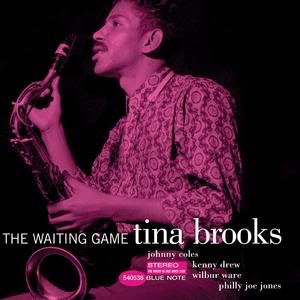
Tina Brooks - The Waiting Game

Tina Brooks released only four LPs and the Waiting Game was the hardest for me to find. It may not be the best session of his, but it's still such a wonderful hard bop date. One look at a typical Blue Note cover and a typically gorgeous set of musicians made me sure I'm gonna spend another 40 minutes listening to this album once again. Jazz, and bebop especially, really helps me forget about all the trouble I've got and keeps me focused enough not to drift away.

Johnny Coles is on trumpet, he's the guy who played with Mingus on his 1964 tour which speaks for itself. Enough to love him ;) Kenny Drew's on piano. He's a very bright pianist - I have only one album of his called Undercurrent and he certainly is groovin' the blues. Rhythm section is as follows: Wilbur Ware (known for his masterful playing with Sonny Rollins) and Philly Joe Jones - who was admired by you know who ;)


Tina Brooks doesn't overuse minor tones, even plays cheerfully at times. His interplay with Johnny Coles is absolutely amazing and the way Kenny Drew plays behind them sends chills down my spine - not to mention his solos, and he gets quite a few of them. Of the six songs, all of them are rather short, clocking at about 5-7 minutes - I'd love to hear those tunes played live by Tina's band, stretched to the limit.

There are quieter moments but don't wait for ballads - even if some moments are slow, they are loud and proud. The songs that I find the best are the opening track ("Talkin' About") and eponymous closing track. I rate those compositions higher than many of the well-known ancient jazz standards played to death on too many occasions during the 40s and 50s.

All in all, the Waiting Game is not as overwhelming as Tina's masterpiece, True Blue. It isn't exciting enough to be in every jazz enthusiast's collection. Neither it's original or rare enough to cost you fifteen bucks - unless you're a bebop lover. And I'm quite a maniac now ;) I wildly crave for jazz LPs that are swinging like famous Lee Morgan's "The Sidewinder" but are challenging enough not to be called "radio-friendly". On this album, Brooks gets close.

14 June 2010

Sunnyland Slim - Slim's Got His Thing Goin' On

This is the good old stuff mixed with modern blues musicians. Recorded in '68 by Sunnyland Slim, a talented pianist straight from the delta, with George Smith, Big Mama Thornton, Luther Allison, Shakey Jake, Al Wilson, Henry Vestine, Larry Taylor, Luther Allison and, most important, Mick Taylor of John Mayall's Bluesbreakers fame. Taylor plays on "You Used to Love Me", "My Past Life", "She's Got A Thing Goin' On" and "Substitute Woman". That's a shame he isn't featured on entire disc! Young British guitarist who was soon to join the Rolling Stones plays with confidence and respect to older bluesmen.

Slim's piano and voice are good. So are compositions, all of them but Elmore James' "Dust My Broom" credited to Albert Laundrew, which is the real name of Sunnyland Slim. Don't let that fool you, though... After the first chords of "Goin' Back to Memphis" you realize it's "Rollin' & Tumblin'" but under a different name. So is the case with most of the stuff here: it's all the usual hooks played by black blues musicians in the delta. "Slim's Got His Thing Goin' On" may be classic, but it's not ordinary. More, it's totally unique. The blend of electric guitars, harmonicas and pianos is wonderful, production just rocks. It's quite clear for a record like that!


My favorite song must be "Everytime We Get to Drinkin'". ;) But it's hard to tell, really, they are all the same. Slower and faster, all of them have a special kind of charm reserved for original Mississippi wailers. Get this disk and play it loud! It's... inspirational. ;)

13 June 2010

Bonus tracks from Valleys Of Neptune

Well I craved for these two bonus tracks that were sold only at US Target shops (lame!) and tried to find them everywhere. I was right, they are quite cool. Another poster here on Blogger posted them some time ago so now I kindly repost them, get the stuff here. Quality versions of "Slow Version" and "Trash Man" rock, clocking together at about 12 minutes. Both songs were recorded in 1969.


Cool, isn't he? ;-)

23 April 2010

Ten Years After - Ssssh

I haven't ever heard a great studio album by Ten Years After. A tremendous live act with one of the most interesting guitarists of the British blues scene, and most probably the fastest :) And it's not like Alvin Lee had no songwriting skills - maybe his songs weren't the best, but quite original at least. So, what's with Ten Years After?

No idea. "Ssssh" is badly produced and badly written, but it has its groove and I really like it, though most of the times I put it on I'm not able to sit it through all 8 tracks ;) Jim Newson wrote in amusing review for AllMusic:

Featured is a lengthy cover of Sonny Boy Williamson's "Good Morning Little Schoolgirl," with reworked lyrics leaving little doubt as to what the singer had in mind for the title character. Also included was a 12-bar blues song with the ultimate generic blues title "I Woke Up This Morning.

Ha ha. Anyway... No favorite tracks that I can pick, no favorite moments, it all kinda flows... But it's well worth a listen. Ten Years After was a fascinating band, not one-hit-wonder act (yeah, I don't like "I'm Going Home" that much). And "Ssssh" is not one of the key works of the (in)famous 1969 year, but the band deserved playing Woodstock.


PS. It's only 33 minutes long so don't hesitate.
PPS. "Good Morning Little School Girl" has to be my least favorite blues standard. Ever.

21 March 2010

Jimi Hendrix - Valleys Of Neptune

I dig it. Dreamy cover, mysterious title and 12 new songs by a man who's hailed the best guitarist ever. Well, Jimi Hendrix was really underappreciated when it came to singing and writing, so it's all good. Awesome quality and performances: there are no messy rehearsals, it sounds like it was recorded yesterday and can really be compared to what Jimi released during his lifetime. There's only one letdown: we are already familiar with some of those songs... Anyway, it deserves at least 4.5 stars I gave it on RYM ;-)


Although it's not all that good, it gets less interesting at moments and I don't like some of the songs, the mood slowly makes you play air guitar along with Hendrix ;) Renditions are agressive. Gotta love Noel Redding singing backup vocals to "Fire". Tricky "Lullaby for the Summer" rocks. The disc ends with a track called "Crying Blue Rain" which starts as a John Lee Hooker rip off and then turns into a mesmerizing blues. What a great way to finish it ;-)

It could've been released in 1969 when it was originally recorded. With maybe two new songs added and two "old ones" removed it would've easily stand beside "Axis: Bold As Love", "Electric Ladyland" and "Band Of Gypsies". I think the best tracks are two singles: "Valleys Of Neptune" and "Bleeding Heart". Cream's "Sunshine Of Your Love" is longer than it should but it's always more Hendrix :-)

I hope it won't be the best archival release of the decade but it will probably hold the title for several months at least. No matter if it was only released to promote other reissues of Hendrix material... It's a great thing to have "Valleys Of Neptune" in any rock and blues collection.

20 March 2010

Let me tell you 'bout Leo Parker

It's been a long time since I wrote about jazz music the last time. I've already reviewed my 5 favorite jazz records and wanted to leave it like that for a while to focus on my another real love: 20s and 30s barrelhouse blues :) I still can't do it, though. I just love exploring new artists ;-) I've had two released by Blue Note Records albums of Leo Parker for quite a long time but I haven't paid them any mind until today when I luckily and totally by accident put them on.

They are bloody brilliant! :) Everybody compliments Leo Parker for his fat, full tone... He's an outstanding saxophone player and really stands out of line: he's easily and instantly recognizable. Leo Parker played with the best musicians in the business for years and finally got to record his own Blue Note LP in 1961. Unfortunately he died after recording two brilliant sessions. One was released in 1961 as "Let Me Tell You 'Bout It", and the second during the 80s as "Rollin' With Leo". They sound basically the same and there's no need to review any of them separately.


I tend to like the first one better, but professional critics rate "Rollin' With Leo" a little bit higher. It doesn't matter, really. Telling you that a few of his tunes remind me of Sonny Rollins work would be a lie. But you can find the same happiness and optimism in the works of both masters. When I hear "Talkin' the Blues" I think about big city blinking at night. On the other hand centerpiece of "Let Me Tell You 'Bout It", the self-titled track, is reminiscent of New Orleans big bands... That's just a loose thought ;-)

Uplifting music for your body and soul and enormous joy for me. I would really love to be stuck in a small club with Leo Parker and his band, doing coke together and playing bebop.

5 reasons why Otis Redding rules

1. He was one of the best male singers ever. Otis was all about emotions. And was really black. I sometimes think he was so good because he didn't have to breath... ;-)
2. He wrote and produced his songs himself. He really knew what he wanted to achieve... His lyrics were rather simple but very witty and inteligent ;-)
3. His shows were among the best ever. Electrifying, fast and loud: many famous musicians learned from him, especially the Rolling Stones.


Some people call Otis a second coming of Jesus... Tragically lost at the age of 26, he was one of the most important musicians of the 60s. He's still called "the King Of Soul" ;)


4. He had the best band and sound in the land. Backed by wonderful Booker T. & the MG's and the Bar-Kays he sounded mighty. He also often collaborated with Steve Cropper and recorded an album with Carla Thomas.
5. He had the best repertoire of all soul musicians of the 60s. Wherever he went audiences knew every word of every song! "Your One and Only Man" is still one of my favorite songs.

20 February 2010

John Coltrane - A Love Supreme

Many fans and critics say that in 1964 John Coltrane, one of the best saxophonists of all time, was at the peak of his powers. He entered the Rudy Van Gelder studio in Englewood Cliffs, New Jersey on December 9 with his classic quintet: Elvin Jones, McCoy Tyner and Jimmy Garrison. Whole album, released shortly after by Impulse! Records, was recorded there. It was called "A Love Supreme" and it became one of the best selling jazz albums ever.

"A Love Supreme" has, really, very little to do with the blues. Oh, let's say nothing. It's mostly an hard bop and free jazz affair. On the other hand, it might seem as a contradiction of the blues which can be also called devil's music. Coltrane's masterpiece is a spiritual album. A way better effort than Dylan's projects in the 80s. :) The blues connection is there, though: Son House, Blind Willie Johnson and many more bluesmen used to sing spirituals, black man's religious songs. And that's what "A Love Supreme" is all about, counting out perfect arrangements, gorgeous interplay between rhythm section and soloists and adventurous ideas.


The best part for me is the first (of three) part: the moment Coltrane starts chanting phrase "a love supreme" is beyond words! The song goes higher and higher. In the final track Coltrane tries something called "wordless recitation": he imitates singing by using saxophone: he plays words without speaking them. Wikipedia says the poem ends with words: "Elation. Elegance. Exaltation. All from God. Thank you God. Amen".

Also of note is great cover art. That's hell of a photo! All in all: get this. One of the best jazz works ever. And I'm proud to have liked it from the very first hearing :-)

14 February 2010

Charles Mingus - Oh Yeah

It was recorded in November of 1961 in Atlantic Studios in New York City. All of the album's tracks are written by Mingus who for unknown reason didn't play bass on this session but moved to piano. Doug Watkins played bass and Dannie Richmond drums, making it an outrageous rhythm section. Jimmy Knepper (trombone), Booker Ervin (tenor sax) and Rahsaan Roland Kirk (everything else) all played beyond words, jamming and improvising on Mingus compositions like they were their own.


This is the strangest piece of music I've heard in a long time. Mingus shouts quickly made-up lyrics, Kirk plays on multiple saxophones at once, and the last track ("Passions Of A Man") makes a great soundtrack for a torture scene or cheap BDSM porn. "Eat That Chicken" is a lovely up-tempo number, very positive and all. I especially loved Mingus describing how much he wanted to chew it ;-) "Ecclusiastics" is my favorite from here. A kind of gospel-jazz, a track divine! Amazing horns and piano. The main riff gets stuck in your head. Piano solos are exceptionable, the fact that Mingus isn't a professional pianist shouldn't worry anyone. He's better than one might think!

"Wham Bam Thank You Ma'am" and "Oh Lord Don't Let Them Drop That Atomic Bomb On Me" are all as cool as their names. Maybe it's not the best Mingus album, but surely it is one of the best jazz albums ever. Talk about wildness.

I still have to track down 3 bonus tracks from the same sessions... Facts are promising. Four out of seven tracks here are absolute masterpieces, the rest of them are still 10/10 or pretty near. It's really the same old hard bop but the fastest I've heard in a long time. I guess my girl would dance to it ;-)

25 January 2010

Oliver Nelson - The Blues and the Abstract Truth

While the last reviewed jazz record by me - Lou Donaldson's "Blues Walk" - had a very polished and gentle sound, this would be a kind of nasty and out of control record. It's still the same nice sound of bebop but it's louder and totally unpredictable. It's "The Blues and the Abstract Truth" by arranger and saxophone player Oliver Nelson.

It all starts with "Stolen Moments", one of my favorite jazz compositions ever. Beautiful melody and catchy riffs, long solos by Nelson, wild Eric Dolphy, trumpeter Freddie Hubbard and pianist Bill Evans, that track became one of the most popular post-50s jazz standards. It's almost nine minutes of pure magic, way more than words can say: you can like jazz or not, this one is for everybody.


Another outstanding tracks are "Hoe-Down" and "Yearnin'". All compositions are by Nelson and he plays main role here, but his side men are doing fabulous job: they are all jazz greats: Eric Dolphy, George Barrow, Freddie Hubbard and rhythm section: Bill Evans, Paul Chambers and Roy Haynes. "Butch & Butch" is another speeding tune on the album, and "Cascades" is what only a couple of months ago I'd simply call a typical jazz composition: now I find a great joy in listening to those raves.

This record - totally unlike most of the others! - makes me want not to play instruments and perform, but rather write jazz compositions. Nelson's works are imaginative: so simple yet so complex, you just gotta hear it to understand. Do yourself a favor! ;-)